Buying a Prince George's County Rental: What the Rules Cost
August 6, 2026
August 6, 2026
Most small investors underwrite a Prince George's County rental the same way they'd underwrite one in Anne Arundel or Frederick. They look at the roof, the rent comp, the cap rate. Then they pick an LLC off a shelf because that's what the podcast said to do.
That last decision is the one that changes the numbers. In Prince George's County, whether your rental is subject to the county's rent cap is not decided by the property. It's decided by how you take title.
The Permanent Rent Stabilization and Protection Act of 2024, known locally as the PRSA, became effective on October 17, 2024, making it one of the most recent rent stabilization laws in Maryland. For units it regulates, landlords can increase annual rent by an amount equal to the lesser of the Washington–Arlington–Alexandria CPI-U plus three percent of the base rent, or six percent of the base rent. Enforcement lives with the Department of Permitting, Inspections and Enforcement, or DPIE, and the legislation gives DPIE authority to impose fines of $1,000 for the first violation and up to $5,000 for any subsequent violation.
Buried in the FAQs the county published to explain the law is the sentence that reshapes the small-investor math:
The PRSA does not apply if you own five or fewer rental units and the units are owned by either a natural person or a living trust of a natural person, or the trust or estate of a decedent. If you own the property through an LLC or corporate entity, the PRSA applies.
That is the mechanism. If you own the property through an LLC or corporate entity, the PRSA applies. It does not apply if you own five or fewer rental units and the units are owned by a natural person or a living trust of a natural person. Even if you live in Prince George's County, if you own the units through a corporate entity such as an LLC, the PRSA applies. The building on the ground is identical either way. The rent schedule is not.
The exemptions do more work than the cap itself. Units not subject to the new law include newly constructed units completed on or after January 1, 2000, units in medical, religious, and nonprofit facilities, owner-occupied group houses, accessory dwelling units, and certain condominiums, and hotels, motels, dormitories, and licensed assisted living facilities. That January 1, 2000 line is measured strictly. For the purposes of the PRSA, the completion date is the date that the initial certificate of occupancy for the property was issued. This is true even if different units in a community were physically completed at different times. The issuance date of the initial certificate of occupancy would still control.
For a small investor, this is what it looks like in practice:
| Property | Ownership | Regulated by PRSA? |
|---|---|---|
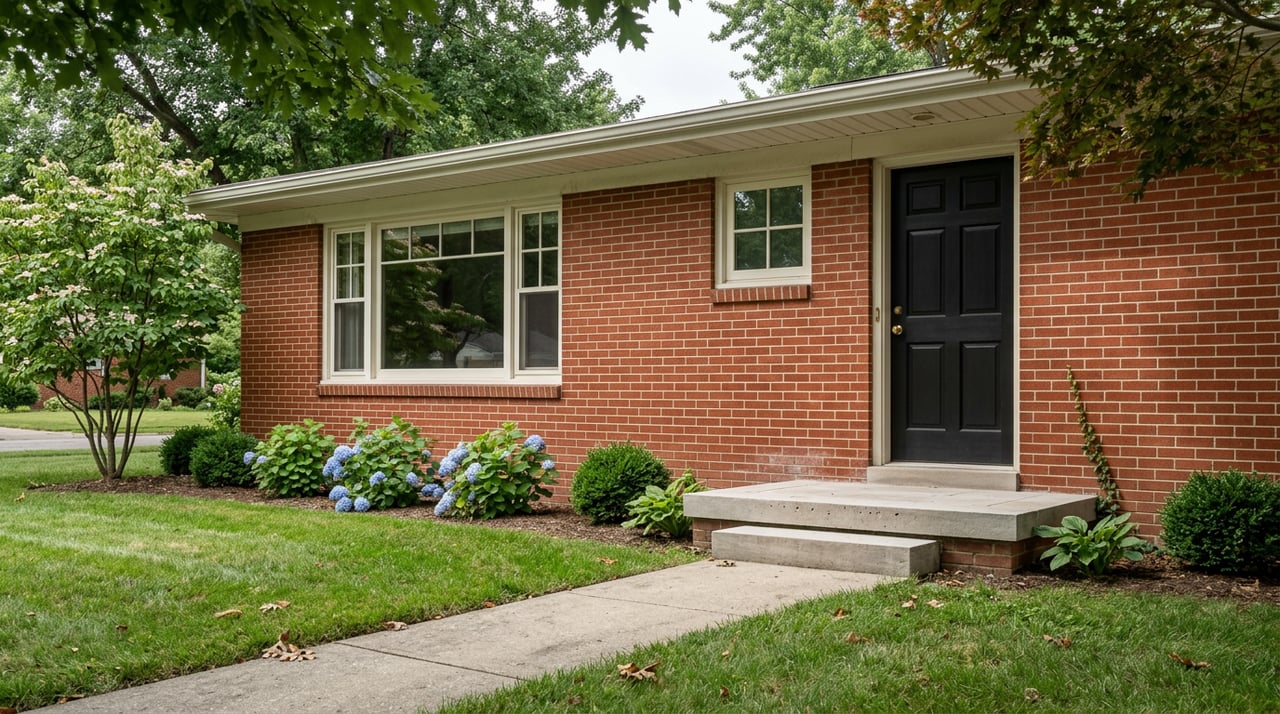
| 1972 brick rambler in Lanham | Individual, 3 rentals total | No |
| Same rambler | Single-member LLC | Yes |
| 2004 townhome in Bowie interior | Individual, 3 rentals | No, post-2000 build |
| 2004 townhome | LLC | No, post-2000 build |
| 1998 Kettering condo | LLC | Yes |
| 1998 Kettering condo | Individual, 6 rentals | Yes, over the 5-unit threshold |
The natural-person carve-out is not a loophole. It is a deliberate policy choice that keeps small mom-and-pop landlords out of the rent stabilization system while pulling institutional and corporate owners in. If your acquisition plan involves scaling past five units in your own name, you are not exempt on unit six. You are regulated on all of them at that point, and every future rent increase in your portfolio has to be modeled against the CPI-U plus three, or six percent, whichever is lower. Beginning May 1 of each year, DPIE will notify landlords and tenants of the upcoming year's rent increase limits, which will be effective from July 1 through June 30.
If you assume DPIE is the licensing authority anywhere in the county, you will file in the wrong place and rent for months without a valid license. All Single-Family and Multifamily Rental Licenses are administered by DPIE's Enforcement Division, except for the following cities and towns which are not licensed in DPIE's jurisdiction: Berwyn Heights, Bowie, Brentwood, Capitol Heights, Cheverly, College Park, District Heights, Edmonston, Forest Heights, Greenbelt, Hyattsville, Landover Hills, Mount Rainier, New Carrollton, Riverdale Park, Seat Pleasant, Town of Laurel and University Park. If those municipalities are listed under the Town column on the SDAT page, you will need to apply with your municipality.
Bowie is on that list. So is Hyattsville, where a lot of small investors have been buying starter duplexes for a decade. The county's PRSA still applies inside those municipalities, but the license, the inspection, the renewal calendar, and the fee schedule are a different jurisdiction's problem. Verify the town column on the Maryland SDAT Real Property Search before you submit anything. That single lookup is the difference between a licensed rental and an unlicensed one.
The Prince George's rental license runs on a specific rhythm that most first-time investors underestimate.
The consequence of skipping this sequence is not just a fine. If a local government requires a license, and a landlord does not have a license, the landlord cannot bring a failure to pay rent action in District Court. A rental income model that assumes standard rent-court enforcement collapses if the license lapses. The Maryland Court of Appeals settled this in McDaniel v. Baranowski, 419 Md. 560 (2011), and it still governs today.
Two-unit properties fall inside the single-family license framework. Single-family rental facilities are any building or structure, or combination of related buildings and structures, in which a landlord provides one or two dwelling units. At three units, you cross into the multifamily license, and a multifamily rental license is $50 per unit for a 2-year license, before the county's technology fee.
Before the rent roll, the closing table takes its cut. The Prince George's County transfer tax is set at a rate not to exceed 1.4% of the actual consideration paid or to be paid under every instrument of writing conveying title to real property recorded in the County, layered on top of Maryland's 0.5% state transfer tax. Recordation runs $2.75 per $500 into FY 2026. That structure matters more for investors than for owner-occupants because the recordation tax applies to both the deed and any new mortgage, so a buyer financing the purchase pays recordation tax twice, once on the deed based on the purchase price, and once on the mortgage based on the loan amount. A first-time Maryland buyer exemption exists at the state level, but an investor buying a rental is not a first-time principal-residence buyer and does not qualify.
On a $400,000 rental purchase with a $320,000 loan, the combined transfer and recordation stack lands somewhere in the neighborhood of $10,000 to $12,000 before title and settlement, split by contract. That expense is a fixed drag on year-one returns and needs to sit inside the underwriting, not next to it.
Does the PRSA apply to a single-family rental I own in my own name? If you own five or fewer rental units and they are owned by a natural person or a living trust of a natural person, the PRSA does not apply. If you own the property through an LLC or corporate entity, the PRSA applies.
What if I already have a license and want to sell the property to another investor? For multifamily properties, the multi-family rental license terminates on change of ownership, but the purchaser may continue to operate the facility without penalty if an application for a new license is submitted to the Director before actual change of ownership. Sequence matters at closing.
Is a post-2000 building really exempt from the cap forever? Yes, based on the initial certificate of occupancy date. Prince George's County exempts units built on or after Jan. 1, 2000, and the rule is measured off the property's original CO, not the individual unit's finish date.
Can a family rental avoid the license entirely? No license is required for a single-family rental facility in certain circumstances, but documentation of the license exemption must be provided to and accepted by the Department. The main categories include rentals to a landlord's parent, child, sibling, grandchild, grandparent, or in-law, and certain active-duty military and job-relocation situations. The exemption is not automatic. You still file for it.
Underwriting a Prince George's County rental is a jurisdiction problem before it's a rent-comp problem. The building matters. So does the county code section, the municipality on the SDAT page, and the name on the deed. If you are weighing a first investment property or a portfolio move inside the DMV, The Dapo Group helps investors sequence the acquisition so the license, the ownership structure, and the closing math all line up before the offer goes out. Book a discovery call and bring the address.
Stay up to date on the latest real estate trends.

When you work with The DAPO Group, you gain more than agents—you gain dedicated partners committed to your long-term success. Whether buying, selling, or investing, we’re ready to help you move forward with clarity and confidence.

The DAPO Group
4806 Rhode Island Ave Hyattsville MD 20781