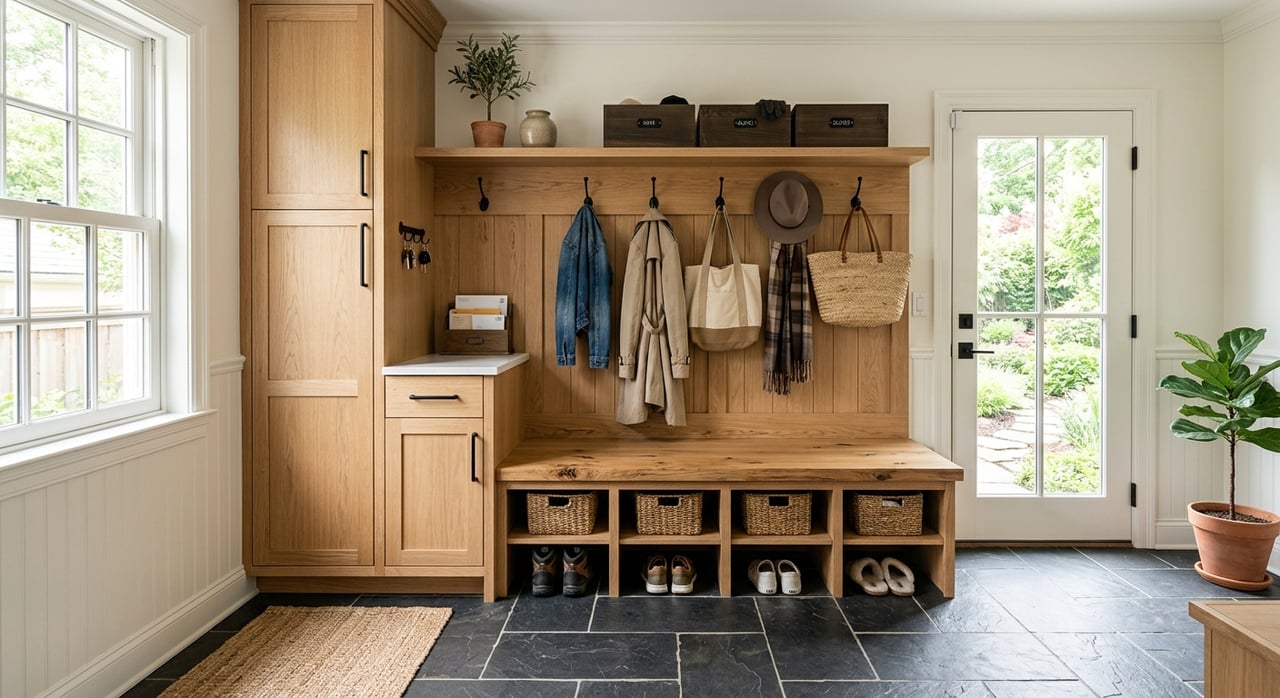
Using A VA Loan In Prince George’s County
June 4, 2026
June 4, 2026
Thinking about using a VA loan in Prince George’s County? You are not alone, and for many military and Veteran buyers, this county offers a practical mix of home options, transit access, and price points that can make the path to homeownership feel more achievable. If you want to understand how VA financing works here, what property types may fit, and how to compete smartly in today’s market, this guide will walk you through it. Let’s dive in.
Prince George’s County gives you a wide range of housing choices, which matters when you are using a VA loan and trying to match your budget, commute, and lifestyle. County planning shows that about 66% to 67% of the housing stock is made up of single-family homes, including detached and attached homes.
That means you are not limited to one kind of search. You may find a detached home with more yard space, a townhouse near major routes, or a condo closer to rail service, depending on your goals and what type of property meets VA rules.
The county also has a strong transit network. Planning documents identify 15 Metrorail stations, 8 MARC stations, and 1 Amtrak intercity rail station, with additional Purple Line stations planned in Prince George’s County.
For many relocating households, that creates a useful tradeoff. If you want easier rail access, attached homes and condos in transit-oriented areas may stand out. If you want more square footage and a more car-oriented setup, detached homes outside the Beltway may offer more options.
A VA-backed purchase loan is made by a private lender, not directly by the Department of Veterans Affairs. One of the biggest benefits is that qualified buyers may be able to purchase with no down payment, as long as the sales price does not exceed the appraised value.
VA loans also do not require private mortgage insurance, which can make monthly payments more manageable. That can be especially helpful if you are trying to balance housing costs with a move, a commute change, or other transition expenses.
There are a few core rules to keep in mind. The home must be your primary residence, and eligible property types can include a single-family home, a condo in a VA-approved project, or a property with up to four units if you live in one of them.
Another important point is that the VA does not set a minimum credit score, but lenders can set their own standards. That is one reason it helps to compare lenders, since fees and underwriting overlays can vary.
Even if you are buying with no down payment, you should still plan for closing costs and other upfront expenses. Most VA borrowers pay a one-time funding fee, although some borrowers are exempt, including certain service-connected disabled Veterans and eligible surviving spouses.
The funding fee can often be financed into the loan or paid at closing. Depending on your financial plan, that flexibility can help you keep more cash on hand.
VA also allows seller concessions of up to 4% of the home’s reasonable value. In a market like Prince George’s County, where negotiation is still possible in many situations, this can be a useful part of your offer strategy.
Detached homes remain a major part of the county’s housing mix and are widely distributed outside the Beltway. If your priority is more interior space, yard space, or a more suburban layout, this category may give you the broadest search.
Townhouses can be a strong match if you want a lower-maintenance option without moving into a condo setting. In Prince George’s County, attached housing is more concentrated around the southern Beltway and the Route 301 corridor, giving you a range of choices depending on commute and lifestyle preferences.
For many VA buyers, townhomes hit a practical middle ground. You may get more space than a condo while still staying near established neighborhoods or transit-linked areas.
Condos can make sense if your top priority is access to Metro, MARC, or mixed-use areas. This can be especially appealing in parts of the county where planning emphasizes walkable, transit-supportive growth.
The key VA rule is simple: the condo project must be VA-approved. If you are considering this route, it helps to confirm approval status early so you do not lose time on a property that will not work for your financing.
If you are interested in house hacking, VA financing may also be used for a property with up to four units, as long as you occupy one unit as your primary residence. That can be a useful option if you want to build long-term wealth while reducing your monthly housing burden.
Price signals in Prince George’s County are clustering in the mid-$400,000s. Maryland DAT reported a fiscal year 2026 first-quarter median residential sales price of $450,000, while PGCAR reported a February 2026 median sold price of $440,000.
At the same time, PGCAR reported 2.39 months of supply, 40 median days on market, and sellers receiving 97.4% of original list price. In plain terms, that suggests a market that is still competitive, but not as overheated as the most intense bidding-war periods.
For you, that means preparation still matters. A clean offer, realistic pricing strategy, and strong understanding of VA appraisal rules can make a real difference.
Some buyers worry that a VA loan will make their offer weaker. In reality, the better question is how well-prepared your offer is.
A strong VA buyer usually starts with full preapproval, not just a quick prequalification. Since lenders can have different standards and fees, choosing one that regularly handles VA loans can help you move with more confidence.
You also want to understand the difference between the appraisal and the inspection. The VA appraisal looks at value and basic property condition requirements, but it is not the same as a home inspection.
That means you should still plan for a separate inspection. It gives you a better picture of the home’s actual condition and can help you make a more informed decision before closing.
If a home is priced aggressively, appraisal risk becomes part of the conversation. Because the VA loan amount is limited by the lower of the appraised value or purchase price, a low appraisal can create a gap.
If that happens, the main paths are usually:
In a market where sellers are getting 97.4% of original list price on average, some flexibility may exist, but it depends on the property and the competition around it. The key is to go in with a strategy, not assumptions.
If rail access is high on your list, station-centered areas may deserve a closer look. County planning repeatedly highlights places like Hyattsville Crossing, College Park, Greenbelt, New Carrollton, Largo Town Center, Suitland, Branch Avenue, Cheverly, and Landover in connection with transit-oriented and mixed-use growth.
These areas may appeal if you want easier access to Metro or commuter rail and are open to attached housing or condo options. They can be especially useful for buyers relocating into the DMV on a tighter timeline.
If your priority is a larger home footprint or more yard space, areas outside the Beltway may offer a stronger fit. County planning notes that much of the county’s growth has continued outside the Beltway, with recent residential growth concentrated in places such as Upper Marlboro and Bowie.
This kind of search may work well if daily rail access matters less than square footage, parking, or a more traditional suburban layout. It often comes down to the balance you want between commute convenience and living space.
For some relocating households, it helps to think beyond the home itself and consider nearby activity centers. National Harbor, for example, is described by the county’s tourism office as a 300-acre waterfront destination with restaurants, shopping, lodging, entertainment, and river access, just minutes from downtown Washington, DC.
That does not mean you need to buy right next to it. It simply helps frame how different parts of Prince George’s County can support different routines and preferences.
Before you jump into showings, a few simple steps can save time and stress:
A little clarity upfront can help you avoid chasing homes that do not fit your financing or your day-to-day life.
Using a VA loan in Prince George’s County is not just about loan benefits. It is also about matching those benefits to the right home type, the right area, and a smart offer strategy.
That is especially true if you are relocating, buying for the first time, or deciding between a condo near transit and a detached home farther out. The best plan is one that fits both your financing and the way you actually want to live.
If you are weighing your options in Prince George’s County, The Dapo Group can help you map out a VA-friendly buying strategy that fits your move, your budget, and your long-term goals.
Stay up to date on the latest real estate trends.
When you work with The DAPO Group, you gain more than agents—you gain dedicated partners committed to your long-term success. Whether buying, selling, or investing, we’re ready to help you move forward with clarity and confidence.

The DAPO Group
4806 Rhode Island Ave Hyattsville MD 20781